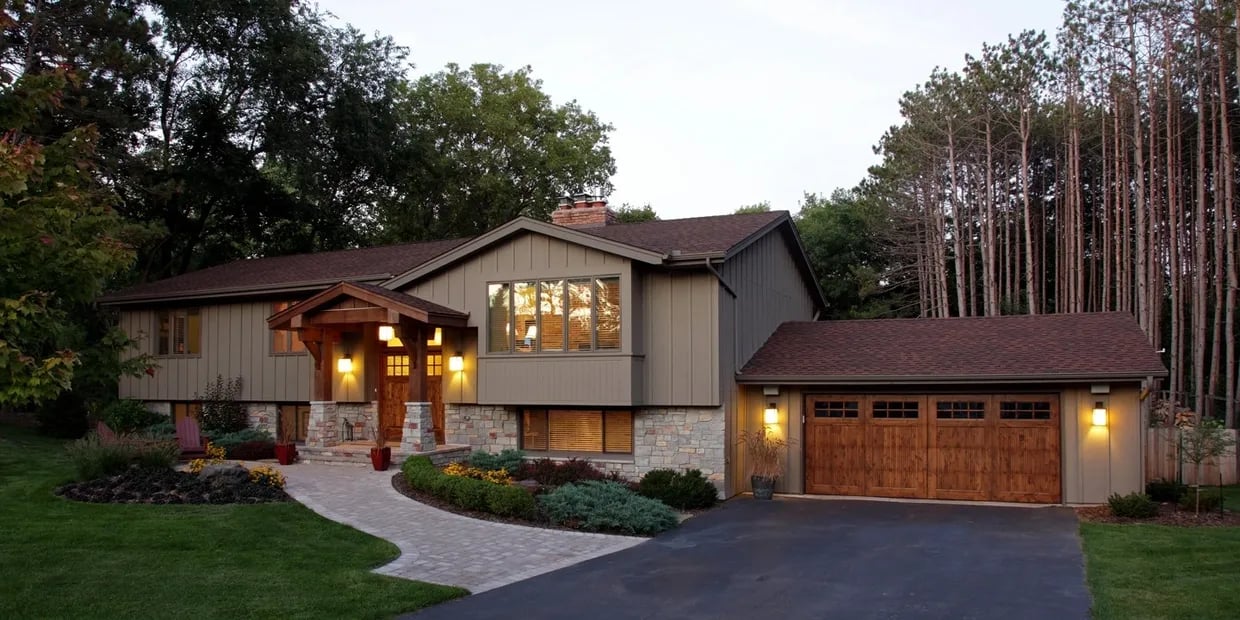
Architectural Characteristics
Split-level and split-foyer homes are distinctive architectural styles that emerged in the mid-20th century. Here are the key characteristics of each:
SPLIT LEVEL HOMES:
Multiple Levels:
Split-level homes have multiple levels that are staggered, creating a unique floor plan. The design typically includes three or more levels, with short flights of stairs connecting each level.
Half-Flights of Stairs:
Stairs in split-level homes are typically half-flights, meaning they ascend or descend only a few steps at a time. This design contributes to the staggered appearance of the different levels.
Separation of Living Spaces:
The different levels often separate living spaces, with common areas like the living room or kitchen on one level and bedrooms on another. This can provide a sense of privacy between different areas of the house.
Bi-Level Configuration:
A common type of split-level design is the bi-level, which typically has two short flights of stairs. The main living areas are on one level, while bedrooms are on another.
Attached Garage:
Split-level homes often feature an attached garage on the lower level, providing convenient access to the home. The garage is usually integrated into the design without dominating the facade.
Low-Pitched Roofs:
Roofs of split-level homes are often low-pitched and may have varying angles. This design complements the horizontal orientation of the staggered levels.
Large Windows:
Split-level homes typically have large windows that allow ample natural light into the living spaces. Picture windows and sliding glass doors are common features.
Minimal Exterior Ornamentation:
Exterior ornamentation is often minimal, with a focus on clean lines and functional design. The emphasis is on the unique configuration of levels.
SPLIT-FOYER HOMES:
Entryway Design:
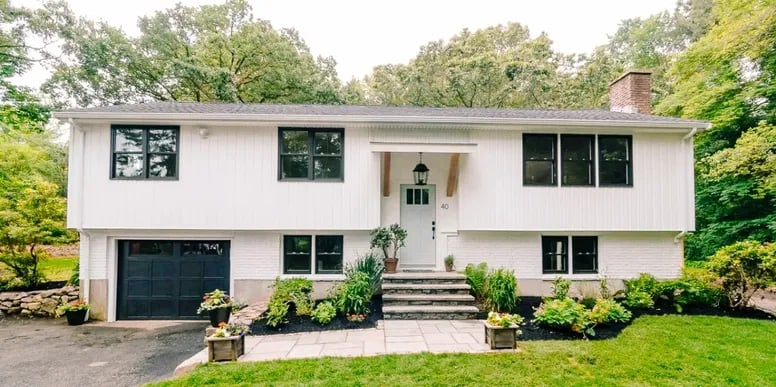
Split-foyer homes have a distinctive entryway configuration where the front door opens to a foyer area. From the foyer, a short staircase leads both up to the main living areas and down to the lower level.
Half-Flight of Stairs:
The staircase in a split-foyer home is typically a half-flight, providing access to both the upper and lower levels. The staircase is a focal point of the foyer design.
Integration of Garage:
The attached garage is often integrated into the lower level of the split-foyer design. The garage is accessed from the lower level, contributing to the overall symmetry of the home.
Open Living Spaces:
The main living spaces on the upper level of a split-foyer home are often open and connected. This may include the living room, dining room, and kitchen, creating a sense of flow.
Bedrooms on Lower Level:
Bedrooms and additional living spaces are typically located on the lower level, accessed via the foyer staircase. This design provides a separation between communal and private areas.
Large Windows:
Like split-level homes, split-foyer homes often feature large windows that provide natural light to both levels. The design may incorporate picture windows and sliding glass doors.
Simple Exterior Design:
Exterior designs of split-foyer homes are often straightforward and may include elements such as brick or siding. The focus is on functionality and the unique entryway configuration.
Bi-Level Configuration:
Split-foyer homes are a type of bi-level design, with two distinct levels. The integration of the foyer and the short staircase is a defining feature.
Both split-level and split-foyer homes offer practical solutions for accommodating different living spaces within a compact footprint. The unique configurations provide a sense of separation between various functional areas while maintaining a cohesive overall design.