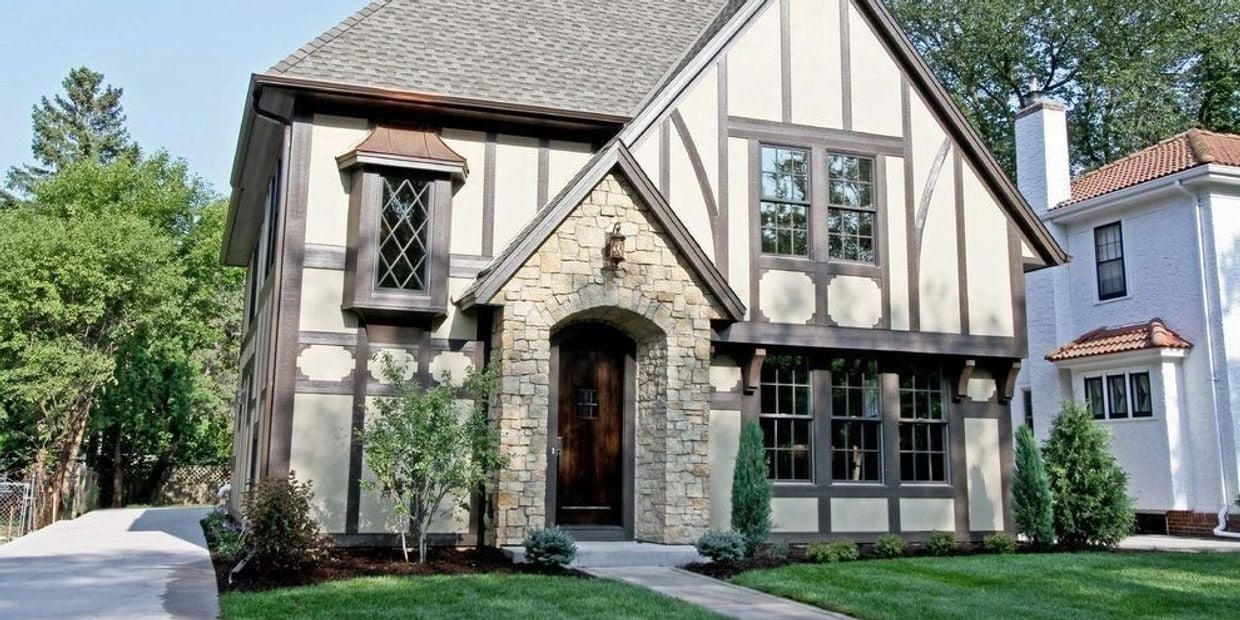
Architectural Characteristics
Tudor homes, inspired by the architecture of medieval England, are known for their distinctive and charming features. Here are the key architectural characteristics of Tudor homes:
Steeply Pitched Roofs:
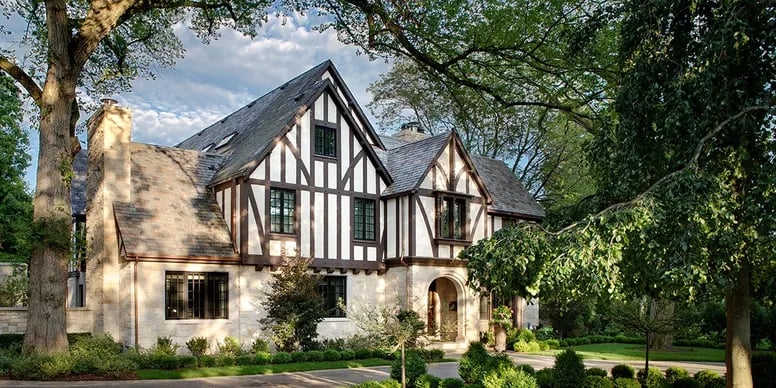
Tudor homes typically have steeply pitched roofs with multiple gables. The rooflines are often complex, featuring cross gables and front-facing gables.
Half-Timbering:
One of the most recognizable features of Tudor architecture is half-timbering. Exposed wooden framing creates decorative patterns on the exterior walls, emphasizing the medieval aesthetic.
Stucco Exteriors:
Stucco is a common exterior material for Tudor homes, often applied over brick or wood framing. The combination of stucco and half-timbering adds texture and visual interest.
Tall, Narrow Windows:
Tudor homes feature tall and narrow windows, often arranged in groups. Casement windows with small panes of glass contribute to the historic charm.
Leaded Glass Windows:
Leaded or mullioned glass windows are common in Tudor homes. The windows may have diamond-shaped or rectangular leaded glass panes, adding a decorative touch.
Arched Doorways:
Arched doorways are a characteristic feature of Tudor architecture. Entry doors may have arched tops, and door surrounds often include decorative details.
Prominent Chimneys:
Tudor homes typically have prominent chimneys made of brick or stone. The chimneys are often tall and can be located at various points on the roofline.
Decorative Brickwork:
Tudor homes may incorporate decorative brickwork, especially in chimneys, gables, and foundation walls. Herringbone and diaper patterns are common.
Quaint Entries and Porches:
Entryways are often charming and may include covered porches or small, enclosed entry vestibules. Tudor homes may feature decorative wooden doors.
Overhanging Second Floors:
The second floor of Tudor homes often overhangs the first floor, creating a distinctive and picturesque silhouette. This feature contributes to the Tudor revival style.
Tall, Narrow Doors:
Interior doors in Tudor homes are often tall and narrow, contributing to the vertical emphasis of the architecture.
Exposed Beams:
Exposed wooden beams are a common interior feature in Tudor homes. They can be found on ceilings and may contribute to the half-timbered appearance.
Crenellations and Parapets:
Some Tudor homes may feature crenellations and parapets, adding a castle-like quality to the design. This is more common in larger or grander Tudor-style structures.
Decorative Bargeboards:
Bargeboards, or decorative trim along the gables, are often intricate and may feature curves, notches, or cutout patterns.
Medieval and Gothic Details:
Tudor architecture often incorporates medieval and Gothic details, such as finials, pinnacles, and decorative carvings.
Textured Interior Finishes:
Tudor interiors may have textured finishes, including plaster walls and exposed wooden beams. Stone or brick fireplaces with elaborate mantels are also characteristic.
Tudor homes exude a sense of history and charm, combining medieval-inspired details with a warm and inviting atmosphere. The interplay of materials, distinctive rooflines, and decorative elements make Tudor architecture easily recognizable and enduringly popular.